
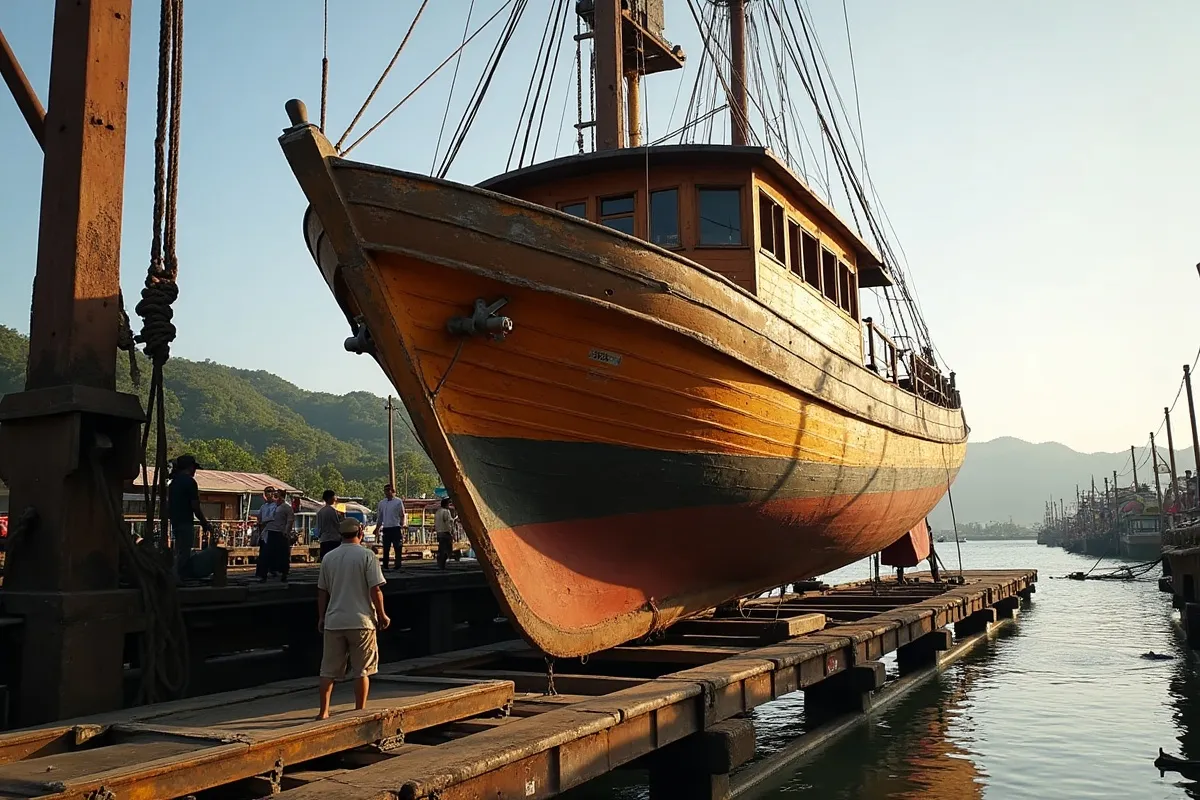
Every repair season in Labuan Bajo begins the same way: a hull comes ashore. Before any plank is renewed or any coating rolled on, the vessel has to leave the water safely, and that single manoeuvre decides how smoothly the rest of the lay period goes. This article walks through how slipway operations actually work at the Komodo gateway — the tide windows, the cradle set-up, the winching sequence and the checks that happen in the first hour on the hardstand.
Why Labuan Bajo Uses Rail Slipways
Unlike the big graving docks of Surabaya or the travel lifts of Bali marinas, the yards serving Labuan Bajo work with rail slipways: steel rails running from the hardstand down below the low-water mark, with a wheeled cradle winched along them. The system suits this coastline for practical reasons. The tidal range is generous, the seabed shelves gently, and the local fleet — charter phinisi, dive boats, speedboats and the harbour’s working craft — is dominated by full-keeled wooden hulls that sit naturally in a cradle. There is no marina-style travel lift here, which is why capacity planning and haul-out booking matter so much in the dry season.
The Tide Window Decides the Date
A haul is planned around a spring-tide window, when high water gives the cradle maximum depth over the rails. The yard checks the tide tables first and the calendar second: a vessel drawing 2.5 m may only have a handful of workable windows each month. Miss one, and the next chance can be nearly two weeks away — a real cost when charter schedules are waiting. This is why we advise owners to fix their slip date around tides before fixing crew rotations or survey appointments, and why the busiest months need bookings weeks ahead, as we explain in our vessel haul-out guide.
Setting the Cradle to the Hull
Before the vessel arrives, the cradle is set to the hull’s shape using the docking plan or, for many local phinisi, the shipwright’s records from the last slip. Keel blocks take the dead weight along the centreline; bilge supports are angled to the turn of the bilge so the hull cannot roll. On the day, the cradle is winched down the rails until submerged, the vessel is warped into position above it at high water, and divers or waders confirm the keel is landing true. Only then does the winch take the strain. A wooden hull that lands badly can spring planks or crack frames, so this stage is never rushed.
The Pull, the Wash-Down and the First Look
The winch pulls the cradle up the rails at walking pace, with lines tended on both sides. As the hull clears the water, the crew begins the pressure wash immediately — fouling is far easier to remove wet than dried. Within the first hour on the hardstand the foreman and, where booked, an attending surveyor make the first inspection pass: sighting the keel, checking rudder and propeller clearances, tapping suspect planking and marking areas for the detailed hull inspection that follows. Anodes, seacocks and the stern gear get their first look before any staging goes up.
What Slipway Time Costs
Owners budgeting a routine slip in Labuan Bajo can use these indicative USD bands, always confirmed by quotation after inspection: haul-out and relaunch from about USD 1,500–4,000 depending on tonnage and cradle work; hardstand lay days USD 40–150 per day; pressure washing usually folded into the haul price. Antifouling, caulking and machinery work are quoted separately — typical coating rates sit around USD 15–35 per square metre, as covered in our marine coatings notes. Larger vessels beyond local cradle capacity are routed to partner yards, with the passage and yard slot staged the same way as the standard haul-out sequence.
How the Relaunch Works
Relaunch reverses the sequence, but with its own checklist: coatings cured, anodes fitted, seacocks proven, shaft gland adjusted, and bilges dry before the cradle rolls. The vessel floats off at high water with the yard crew aboard, engine running, checking the stern gland and every skin fitting while still within reach of the winch wire. For phinisi that have had seam work, the first hours afloat are watched closely as the timber takes up. Where a class or insurance surveyor is involved, sign-off happens dockside — our survey support team schedules the attendance so the lay period does not stretch waiting for one.
Frequently Asked Questions
How long does a typical slipway haul-out take in Labuan Bajo?
The haul itself takes a morning: positioning at high water, landing on the cradle and winching ashore usually run two to four hours. The full lay period depends on the work list — a wash, inspect and antifoul visit is commonly five to ten days, while plank or caulking work extends it.
What size vessel can the local slipways handle?
As a working rule, hulls up to roughly 40 m LOA and moderate displacement suit the local rail slipways, subject to cradle fit, draught and the tide on the day. Larger vessels are routed to bigger yards in Bali or Surabaya, and we arrange that plan too.
Can I stay aboard while the boat is on the hardstand?
Crew often do, particularly on phinisi with generators and tanks arranged for it. We confirm each yard’s rules on living aboard, shore power and freshwater during the works, and plan ladders and access so the boat remains safe and workable.
Do slipway bookings really fill up in the dry season?
Yes. From roughly May to October the Komodo charter fleet works through its maintenance windows and cradle slots are contested. Booking two to six weeks ahead around a spring tide is realistic; short-notice slots do appear, but only when another vessel relaunches early.
To book a slipway slot or plan your next haul, message WhatsApp +62 811 3941 4563 or email bd@juaraholding.com with your LOA, draught and preferred dates — or use our contact page. For wooden-fleet specifics, see the phinisi shipyard guide; for visiting motoryachts and sailing yachts, start with our yacht shipyard services.