
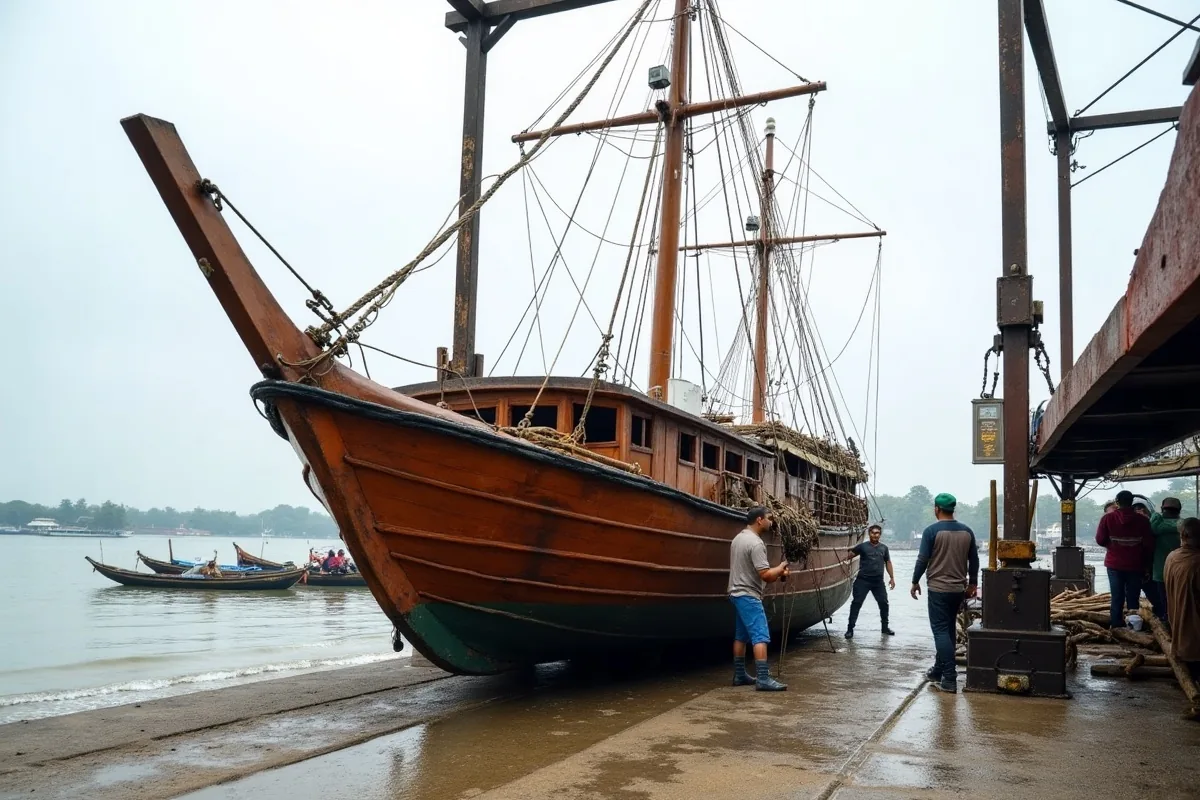
Every boat working Komodo waters eventually needs to come ashore — for antifouling, a surveyor’s inspection, shaft and rudder work, or repairs that cannot be done afloat. This guide covers how haul-out works in Labuan Bajo: real capacity, tide windows, booking lead times, what happens on the day, and what it costs in indicative USD terms.
Slipway Capacity in Labuan Bajo
The slipways serving the town use winch, rail and cradle systems sized for the local charter and fishing fleet. As a working rule they handle wooden and displacement hulls up to around 40 m LOA and moderate tonnage; the practical limit on any given haul is set by cradle fit, hull shape and the height of the tide rather than a single headline number. Fin-keel yachts and catamarans are assessed case by case, and vessels beyond local capacity are routed to larger facilities in Bali or Surabaya — we manage that hand-off when needed. Our shipyard facilities overview maps the wider national options.
Tide Windows and Booking Lead Times
Hauls are scheduled around spring tides, when high water gives the cradle enough depth to float the vessel on. That means realistic haul dates cluster in a few days each fortnight — and it is why we ask owners to book early. In the dry-season rush from June to October, slipway slots are typically reserved four to six weeks ahead; in the wet season two weeks is often enough. If your work list includes imported parts, we time the order through spare parts sourcing so parts and tide arrive together.
What Happens During a Haul-Out
On the day, the crew positions the vessel over the submerged cradle at high water, divers check the bearing points, and the winch brings her up the rails. First jobs ashore are the pressure wash and the surveyor’s walk-round — the moment hidden problems surface. From there the planned list runs: antifouling renewal, anodes, propeller and shaft work, seacocks, rudder bearings, and any hull repairs found during inspection. Relaunch is booked on a later tide once the punch list is verified and coatings have cured. For the fuller repair context, see our vessel haul-out notes and boat repair services.
Hardstand and Lay Days
Time ashore is charged per lay day, typically USD 40–150 depending on vessel size and the ground space occupied. A straightforward antifoul-and-anodes visit needs three to five days including cure time; add survey repairs and the stay commonly runs one to two weeks. We keep lay days honest by sequencing trades in parallel — hull, machinery and electrical crews working the same window rather than queueing one after another.
Indicative Haul-Out and Yard Costs in Labuan Bajo (USD)
Two price structures apply, and mixing them is the most common budgeting error owners make here. The local route — the tidal slipways and careening grids at Labuan Bajo and elsewhere on Flores — is quoted as a flat price per haul, because there is no rated lift to meter. The away route — a full-service yard in Bali (Benoa), Bima or Surabaya — is quoted per foot of LOA, because those yards run travel-lifts. A quote of USD 8–15 per foot is therefore never a Labuan Bajo haul price; it is the price of leaving Labuan Bajo.
| Line item | Route | Indicative range (USD) | Basis |
|---|---|---|---|
| Pre-haul or pre-purchase marine survey | Labuan Bajo | 200 – 500 | Per survey, vessel afloat or hauled |
| Tidal slipway or careening haul, wooden or displacement hull to about 40 m LOA | Labuan Bajo & Flores grids | 600 – 2,500 | Per haul, including positioning and refloat on the matching tide; pressure wash normally included |
| Hardstand lay day | Labuan Bajo | 40 – 150 | Per day, by vessel size and ground space occupied |
| Antifouling package, 15–24 m | Either | 4,000 – 15,000 | Haul-out, antifoul and anodes as a package |
| Antifouling plus running gear, about 20 m | Either | 3,000 – 8,000 | Coating plus shaft, propeller and rudder attention |
| Cosmetic refresh including topside paint, 15–24 m | Away yard preferred | 15,000 – 40,000 | Needs covered workspace for a durable finish |
| Travel-lift or slipway haul at a full-service yard, 30–100 ft | Bali (Benoa), Bima, Surabaya | 8 – 15 per foot LOA | Per round trip including pressure wash; passage and crew time are additional |
Where these figures come from. They are published Indonesian yard market ranges maintained by the Komodo Luxury group, cross-checked against haul-out bookings this desk has coordinated in Labuan Bajo, and last reviewed on 19 August 2026. They are planning ranges, not a quotation: the price of any individual haul is set at pre-haul inspection, when cradle fit, hull condition and the tide of the week are known. All figures are displayed in USD; Indonesian port, harbourmaster and statutory fees are levied in IDR and are quoted separately at the rate of the day.
What the haul price does not include. Antifouling paint and consumables, shipwright labour on any repair found after the pressure wash, anodes, replacement seacocks or shaft components, surveyor’s fees, and the passage cost if the vessel has to be moved to an away yard. Insurance-driven inspections are best combined with a planned haul — our survey support team puts an independent surveyor on the hardstand while the hull is already dry, which is the cheapest moment to look.
Frequently Asked Questions
How far ahead should I book a haul-out in Labuan Bajo?
Four to six weeks in the June–October dry season, when the charter fleet queues for slips; around two weeks in the wet season. Booking means locking a spring-tide window, so late requests often wait a full tide cycle.
Can my crew live aboard on the hardstand?
Usually yes for working crew, with ladder access, shore power by arrangement and water available. Overnight arrangements are confirmed with the yard at booking since ground space and safety rules differ between slipways.
What if the surveyor finds problems once the boat is out?
This is common and is planned for. We re-scope on the hardstand, issue a revised itemised estimate before extra work starts, and adjust the relaunch tide only if the added scope genuinely needs it.
Do you haul steel or fibreglass vessels, or only wooden boats?
All three, provided the hull form sits safely on a rail cradle. Steel and GRP displacement hulls are routine; light fin-keel yachts and multihulls are assessed individually, and we will say plainly when a Bali or Surabaya lift is the safer choice.
To lock a slipway slot, send your LOA, displacement and target dates to WhatsApp +62 811 3941 4563 or bd@juaraholding.com, or use the contact page. Wooden-hull owners should also read our phinisi shipyard guide; yacht owners, the yacht shipyard page.