
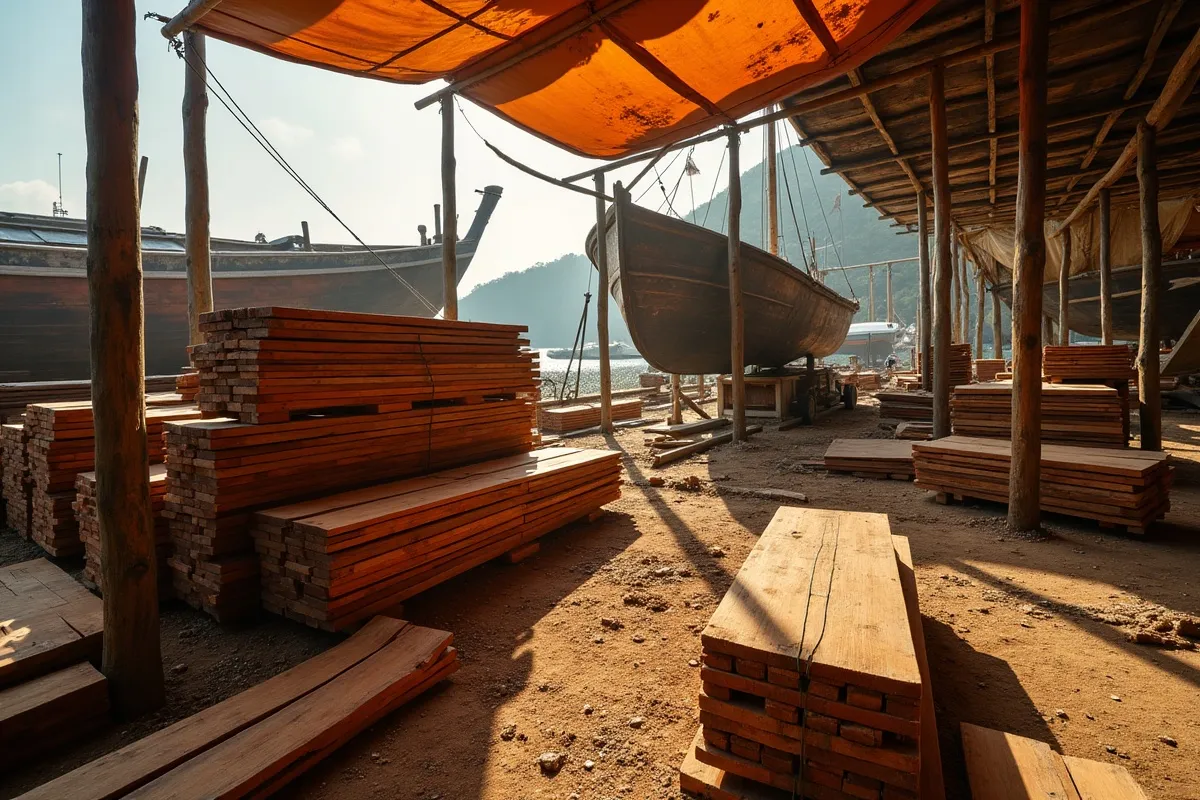
Every plank replaced on a phinisi starts its journey long before the boat is hauled. Somewhere a tree was felled legally, sawn, shipped between islands, stacked and seasoned — and only then offered up to a hull. Timber supply is the least visible part of wooden-ship repair in Labuan Bajo and the one that most often decides whether a lay period runs to schedule. Here is how the local timber chain works, which species do which jobs, and how we manage the buying for repair clients.
The Species That Keep the Fleet Afloat
Three names dominate repair conversations here. Ironwood — ulin — is the heavyweight: immensely dense, naturally durable, the choice for keels, sternposts, deadwood and any plank that lives underwater. Bungur and similar regional hardwoods carry much of the topside planking and frames. Teak, when budgets allow, rules decks and brightwork for its stability and weathering. Each species has a job description written by generations of Sulawesi builders — the same tradition that launched most of this fleet, as we note in the phinisi shipyard guide — and substituting the wrong wood in the wrong place is a repair that fails early.
Where Repair Timber Actually Comes From
Flores itself supplies some of the trade, but the serious volumes move between islands: Kalimantan for ironwood, Sulawesi and Java for other hardwoods, arriving by inter-island freighter into the Labuan Bajo supply chain alongside every other marine consumable — the same lanes described in our spare parts sourcing notes. Lead time is the operational fact that matters: a specific ironwood section for a sternpost can take weeks to arrive, which is why we confirm timber lists at inspection time and order before the slipway slot, not after the old plank is off.
Legality and Paperwork
Indonesian timber moves under a national legality assurance system, and buyers should expect documents with their wood: legal-origin certification and transport papers that trace the stock back through licensed mills. For owners this is not bureaucracy for its own sake — flag states, insurers and future buyers increasingly ask where the timber in a repair came from, and paperwork protects the vessel’s story. We buy through suppliers who provide it as a matter of course and keep copies in the vessel’s repair file alongside the photographs each stage of work already gets.
Seasoning, Sizing and the Shipwright’s Eye
Fresh-sawn hardwood is full of water and will shrink, check and move as it dries; fastening it straight into a hull builds future failure into the repair. Proper stock is air-dried under cover, stickered so air moves between boards, and left until its moisture content suits the job. At selection, the shipwright reads each board — grain run, knots, sapwood, checks — and matches it to the curve and load of the plank it will become. Heavy sections for keel or frames are chosen tighter still. This is judgement work, and it is exactly what separates the yards that inspect well from yards that just fill holes.
What Timber Work Means for Your Budget
Timber is quoted per work list rather than per menu, because a plank’s price is set by species, section and access — as a working band, individual plank replacement in this fleet typically lands around USD 150–600 per plank including labour, with heavy structural sections scoped separately after inspection. Costs are confirmed in USD before work starts, with the timber documents attached to the quote. Where a structural repair outgrows local capacity, the job is escalated to the larger facilities profiled in our guide to marine repair in Indonesia. New construction remains the craft of South Sulawesi’s master builders; our lane is keeping the existing fleet strong, which is precisely the repair scope covered under yacht shipyard services for non-traditional hulls too.
Frequently Asked Questions
Which timber is best for below-waterline repairs on a phinisi?
Ironwood (ulin) is the standard choice for keels, sternposts and underwater planking because of its density and natural durability. Where ironwood sections are unavailable in time, the shipwright specifies the closest durable alternative and says so openly in the quote.
How long does it take to source repair timber in Labuan Bajo?
Common planking stock is often available from seasoned local supply within days. Specific heavy sections — a keel piece, a sternpost — can take two to six weeks to arrive by inter-island freight, which is why timber lists are ordered at inspection, before the haul-out.
Is the timber you buy legally certified?
Yes. We buy against Indonesia’s timber legality documentation and keep the papers with the vessel’s repair records, so owners can show insurers, flag surveyors or future buyers exactly what went into the hull and where it came from.
Can old planks be reused instead of buying new timber?
Occasionally a sound board comes off for access and goes back on, but planks removed for rot, worm or fastening failure are finished. Reusing tired timber saves money once and costs a haul-out later — we quote new stock and explain why.
To plan timber work for your next lay period, message WhatsApp +62 811 3941 4563 or email bd@juaraholding.com with your vessel and suspected plank list — or use our contact page. Booking the slip? Start with the vessel haul-out guide so the wood is waiting when the hull comes ashore.