
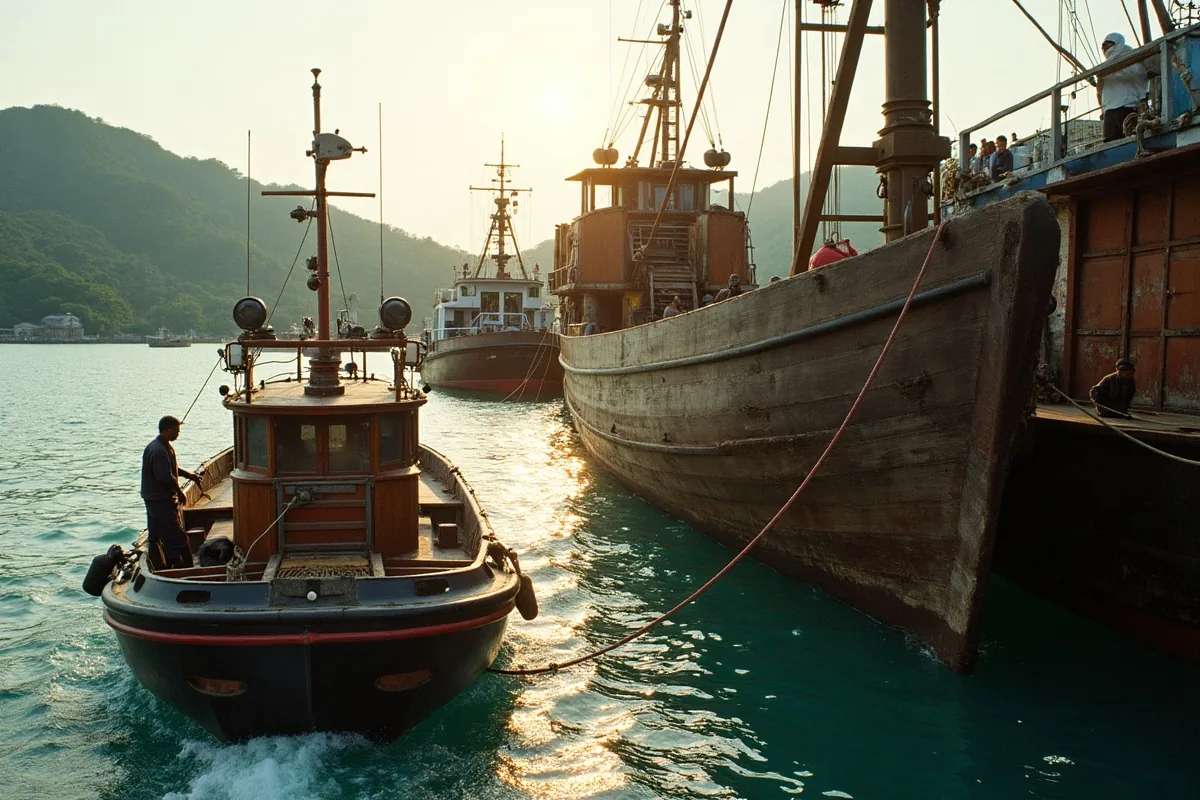
Most vessels arrive at the slipway under their own power. The interesting ones do not. A liveaboard mid-rebuild with its gearbox on the workshop bench, a sailing yacht with the rudder dropped for repair, a new engine that has to cross the bay lying on a deck barge — all of them need the quiet trade that this article covers: harbour towage and barge support for yard operations, the floating half of our haul-out and slipway service.
When a Vessel Cannot Move Itself
Dead-ship moves are routine yard arithmetic. Machinery jobs like the rebuilds in our generator guide or a full engine overhaul leave a hull temporarily powerless; steering repairs do the same; and some vessels waiting on parts simply must vacate a commercial berth. Each case needs the same plan: a tow arranged, insurance notified, and the move timed so the vessel arrives at the rails exactly when the cradle and tide are ready — because a dead ship that arrives early has nowhere convenient to wait.
How a Dead-Ship Tow to the Slip Works
The tow itself is short — usually within the bay — but run formally. Bridles are rigged to proper strong points, not mooring cleats; a riding crew stands by the anchor as the only brake the vessel has left; chase boats manage lines at the receiving end; and VHF coordination keeps ferries and charter traffic clear. At the rails, the tug holds the hull against wind and current while winch wires take over and divers confirm the cradle landing, following the sequence in our slipway operations guide. The whole operation is planned against the same spring-tide window as the haul, which is why tow and slip are booked as one job on the yard calendar.
Barge Cranage for the Heavy Items
The second half of the trade is vertical. Engines, gearboxes, generators, masts, tanks and timber baulks all eventually need to cross the gap between shore and deck, and beyond a certain weight the answer is a crane barge alongside. Typical lifts run from a few hundred kilograms to several tonnes: an engine out through a cut deck, a mast stepped or unstepped, a replacement genset landed directly into the engine-room opening. Every lift runs to a plan — tagged slings, a single signaller, deck strength checked — under the controls described in our yard safety standards.
Freight, Groundings and the Odd Jobs
Barges also close the last leg of the supply chain: outsize consignments that arrive by interisland ship — engines, shafting, timber — are lightered to the yard or straight to the vessel, connecting to the routes in our parts logistics guide. And when a grounding or storm leaves a hull stranded, the same tug-and-barge combination becomes the recovery toolkit — ground tackle laid, pumps staged, the casualty refloated and walked to the rails — work covered fully in our salvage and refloat guide.
Weather, Traffic and Park Realities
Labuan Bajo’s bay is sheltered but busy: ferry wakes, charter departures on a morning schedule, moorings in inconvenient places, and dry-season afternoon winds that arrive on a timetable of their own. Tows and lifts are therefore planned for early-morning slack conditions, with abort criteria agreed in advance — a lift that waits a day costs less than one that swings. Moves near park waters respect the traffic and mooring rules the fleet operates under, and harbour coordination is handled as part of the job rather than left to the owner.
What Tug and Barge Support Costs
Indicative USD figures, confirmed by quotation: an in-bay dead-ship tow to the slipway commonly runs USD 400–1,500 including chase boat and riding crew; crane-barge days typically USD 800–2,500 depending on crane size and lift count; lightering freight is priced per move. Standby weather days are agreed openly in the plan rather than appearing on the invoice afterwards. For long-distance tows to partner yards in Bali or Surabaya, we arrange the passage, insurance and receiving yard as one package through our nationwide marine repair links.
Frequently Asked Questions
Can you move my boat to the slipway if the engine is stripped?
Yes — that is the classic dead-ship move. We rig a proper towing bridle, put a riding crew aboard with the anchor ready, and time the tow so the vessel meets the cradle on the planned tide. Your insurer is notified as part of the plan.
How heavy a lift can the crane barge handle?
Routine lifts run to several tonnes — engines, gensets, masts and tanks. Anything beyond local barge capacity is planned honestly: split into components where the job allows, or scheduled with heavier equipment brought from outside on a known lead time.
Do I need tug support for a normal haul-out?
Usually not — vessels under power position themselves with yard line-handlers assisting. Tug support enters when steering or propulsion is unavailable, when windage makes a big hull unmanageable in the approach, or when the insurer requires it.
Can spare parts or an engine be delivered straight to my boat by barge?
Yes. Outsize consignments landed by interisland ship are lightered alongside and craned directly aboard — often straight through the deck opening prepared for them — which saves double-handling through the town’s roads entirely.
To plan a move, tow or lift, message WhatsApp +62 811 3941 4563 or email bd@juaraholding.com with your vessel, weights and dates — or use our contact page. For emergency response, see emergency repairs in Komodo waters.