
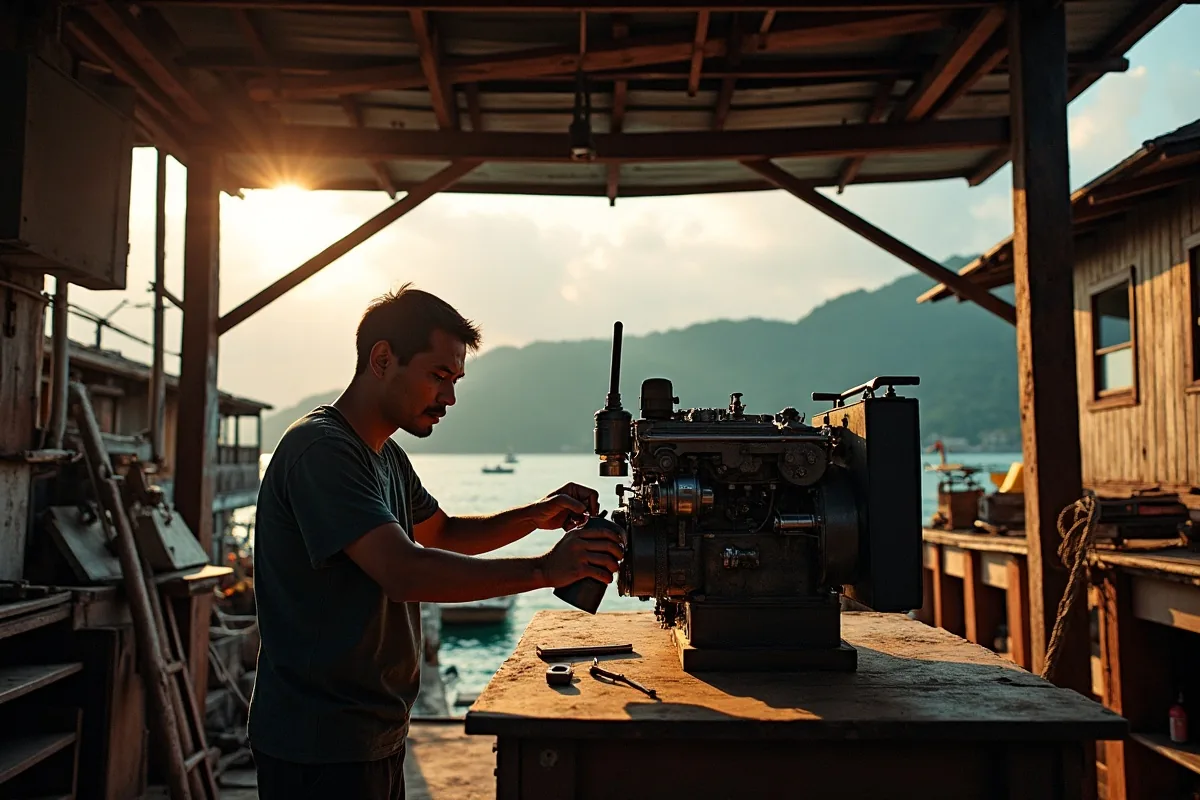
On a Komodo charter boat the main engine gets the glory, but the generator does the work. Guests judge a liveaboard by cold cabins, hot showers and charged dive lights — all generator load, running from before breakfast until after midnight. It is common for a genset here to log three or four times the annual hours of the propulsion engine, which is why generator failures top the mid-season breakdown list. This article covers how we assess, rebuild and recommission marine generators, alongside the wider work of our diesel engine repair shop.
The Load Profile That Wears Them Out
A 30 m liveaboard typically carries one or two gensets in the 20–80 kVA range, cycling between heavy evening air-conditioning load and light overnight running. That pattern — long hours, variable load, tropical cooling water — wears injectors, valve gear, seawater pumps and heat exchangers faster than the datasheet suggests. Light-load running glazes bores and soots exhausts; hard evening loads find every cooling weakness. Understanding the profile matters because it decides the rebuild scope: hours alone do not tell the story.
Symptoms Before Failure
Generators announce their decline. Rising oil consumption and crankcase pressure point to rings and bores; hunting under load to fuel or governor wear; climbing exhaust temperature to cooling-circuit scale; darkening lube oil to blow-by or injector dribble. Voltage and frequency instability may be the engine or the electrical end — we test both before condemning either, and where the fault sits in the wiring, regulators or distribution it moves to the scope covered in our electrical refit guide. An oil sample and a load-bank test give the honest baseline for the rebuild decision.
Top-End Overhaul or Full Rebuild
Many gensets need less than owners fear. A top-end overhaul — cylinder heads, valves, injectors, seawater pump, heat exchanger core, hoses and mounts — restores most performance loss at a fraction of full-rebuild cost and fits inside a routine lay period. A full rebuild strips to the block: bearings, liners or rebore, pistons and rings, oil pump, complete cooling and fuel system overhaul, plus the alternator end cleaned, tested and re-bearinged. We recommend the smaller scope whenever the measurements support it and say plainly when they do not.
Cooling, Exhaust and Mounts — the Neglected Half
Half of every rebuild’s value lies outside the block. Raw-water circuits scale up in these warm seas; exhaust elbows rot from the inside; flexible mounts collapse and feed vibration into the hull that crews mistake for engine roughness; soundshield seals give up and cabins get noisy. Every rebuild here includes the cooling path end to end, the wet exhaust as far as the transom, and mount replacement with alignment checked — the same vibration discipline that runs through our shaft and stern gear work.
Parts, Scheduling and the One-Lay-Period Rule
Rebuild kits for the common marine gensets — Yanmar, Kubota-based sets, Cummins Onan, Perkins — come from Java or Singapore on one- to two-week lead times via the chain in our parts logistics guide. So the sequence is fixed: survey and oil sample first, kit ordered while the vessel keeps working, rebuild booked for the week parts land — ideally inside a slip already planned on the yard calendar so hull and machinery work share one lay period. Emergency rebuilds mid-season are possible with air-freighted kits; they cost more in freight and lost charters, which is the argument for the planned version.
What Generator Work Costs
Indicative USD figures, confirmed by quotation after inspection: a load-bank test and assessment USD 150–400; top-end overhauls commonly USD 1,200–4,000 with parts; full rebuilds of 20–80 kVA marine sets typically USD 4,000–12,000 depending on model and what measurement finds; new mounts and exhaust components itemised separately. Where replacement beats rebuilding, we say so with numbers for both paths, and the replacement set is usually sourced and installed inside a planned refit slot, freight included.
Frequently Asked Questions
How many hours should a marine generator run before rebuild?
As a working band, top-end attention around 6,000–10,000 hours and full rebuild consideration from 12,000–20,000 — but Komodo load profiles compress this. Oil analysis, compression readings and a load-bank test decide the real answer better than the hour meter.
Can you rebuild the generator aboard, or must it come out?
Top-end work happens in place. Full rebuilds usually come to the workshop bench — cleaner, faster, better measured — which means lifting the set out through the deck or engine-room hatch, sometimes with cranage. We survey the route out before quoting.
My generator runs but the power is unstable. Engine or electrical?
We test in order: governor response and fuel delivery on the engine side, then AVR, windings and connections on the electrical end. It is measured, not guessed, and the fix is quoted on whichever side the fault genuinely sits.
Is it worth rebuilding an old genset rather than replacing it?
Often yes — a sound block with a documented rebuild gives years of service for well under replacement cost. When corrosion or parts availability argues otherwise, we show the comparison openly and help with either path.
To book an assessment or load-bank test, message WhatsApp +62 811 3941 4563 or email bd@juaraholding.com with your set’s model plate and hours — or use our contact page. For season-planning the wider machinery space, see our engine overhaul scheduling guide.