
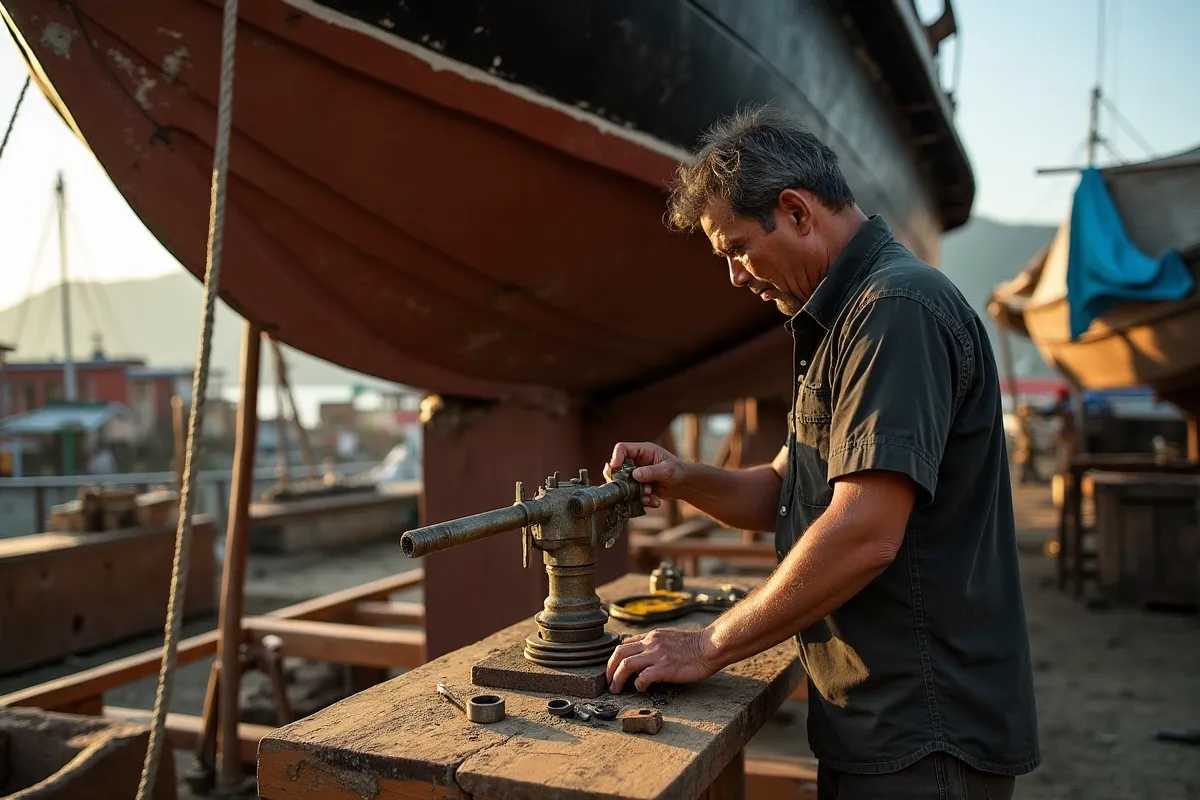
Nothing on a working boat punishes neglect like the stern gear. A worn cutlass bearing chews a shaft; a tired gland drips into the bilge all season; a dinged propeller vibrates the whole drivetrain loose. In a charter fleet that motors between Komodo anchorages daily, these precision jobs are what keep vessels earning. Here is how prop shaft and stern gear work is actually done in Labuan Bajo, and how to plan it into a lay period without losing extra days.
Reading the Symptoms Before the Haul
Most stern gear problems announce themselves early. Vibration that grows with revs points to the propeller or shaft straightness; a rumble at the stern under way is often the cutlass bearing; a gland that needs constant tightening has finished its packing or its seal. Crews should log when the symptom appears and at what engine speed — that record shortens the diagnosis ashore. During the first inspection on the hardstand, the yard levers the shaft to measure bearing clearance and checks the propeller for tip damage and dezincification before quoting anything.
Drawing the Shaft: the Heart of the Job
Serious stern gear work starts with drawing the shaft. The coupling is split at the gearbox, the propeller pulled with a proper extractor, and the shaft slid clear — on many phinisi that means planning around the rudder or lifting a section of aft deck, which is why this job belongs in a scheduled slipway booking rather than an emergency. Once out, the shaft is checked for straightness on rollers, measured at the bearing lands, and inspected for crevice corrosion where it sat in the stern tube. A shaft within tolerance is dressed and returned; one beyond it is machined or replaced through spare parts sourcing.
Bearings, Glands and Seals
The cutlass bearing is renewed whenever clearance exceeds tolerance — pressed or drifted out of the stern tube or P-bracket and a new one fitted true. Stern glands split into two families here: traditional stuffing boxes, repacked with the correct size of packing and adjusted to a drip, and mechanical face seals, replaced as units with their wear faces protected during fitting. On wooden hulls the stern tube itself gets attention too — the deadwood around it is checked for softness and refastened where needed, work that sits naturally with the phinisi shipyard trades. Engine-to-shaft alignment is verified with feeler gauges at the coupling before sea trial.
Propeller Work: Repair, Balance, Fit
Propellers leave Labuan Bajo in two directions: minor edge damage and light bends are dressed and balanced regionally, while serious repitching or hub work travels to specialist shops in Surabaya through our logistics chain. The wheel is refitted on a cleaned, lightly lubricated taper with the key checked for fit, torqued, and locked. Anodes go back on the shaft and hub — their absence is the smallest oversight behind the most expensive electrolysis damage we see. Our propeller repair guide covers the failure patterns in more detail.
Costs and Scheduling in Practice
Indicative USD bands, always confirmed after measurement: shaft draw with cutlass bearing renewal typically USD 800–2,500 depending on shaft size and access; gland repack from about USD 150; mechanical seal replacement USD 400–900 plus the unit; propeller dressing from USD 300. The work adds two to five days to a lay period when parts are on hand — the long pole is always the bearing or seal that has to fly in, so we confirm sizes and order before the vessel is even hauled. Jobs beyond local machining capacity are escalated to the machine shops covered in our marine repair across Indonesia overview. After relaunch, a short sea trial proves gland temperature and vibration before the vessel returns to charter.
Frequently Asked Questions
How do I know my cutlass bearing needs replacing?
A rumbling or knocking from the stern under power, and visible shaft movement when levered on the hardstand, are the classic signs. Clearance is measured at haul-out; once it exceeds the maker’s tolerance, renewal is due — waiting only transfers the wear to the shaft.
Can stern gear work be done without hauling out?
Repacking a stuffing box can sometimes be done afloat by a careful crew. Everything else — bearings, seals, shaft drawing, propeller removal — needs the vessel ashore on the slipway for safe access and proper measurement.
How long does a full shaft and bearing job take in Labuan Bajo?
With parts on hand, two to five working days within a normal lay period: one day to draw and measure, one to two for machining or fitting, one to reassemble and align, then sea trial after relaunch. Parts sourcing is what stretches it, so we pre-order by measurement.
Do you service saildrives as well as shaft drives?
Yes — diaphragm-sealed saildrive legs on visiting yachts are serviced ashore with their own seal and anode schedule. See our yacht shipyard services page for how visiting-vessel work is arranged.
To scope stern gear work, message WhatsApp +62 811 3941 4563 or email bd@juaraholding.com with your shaft diameter if known, symptoms and preferred dates — or use our contact page. Pair the job with your next scheduled slip via the vessel haul-out guide to save a second lay period.