
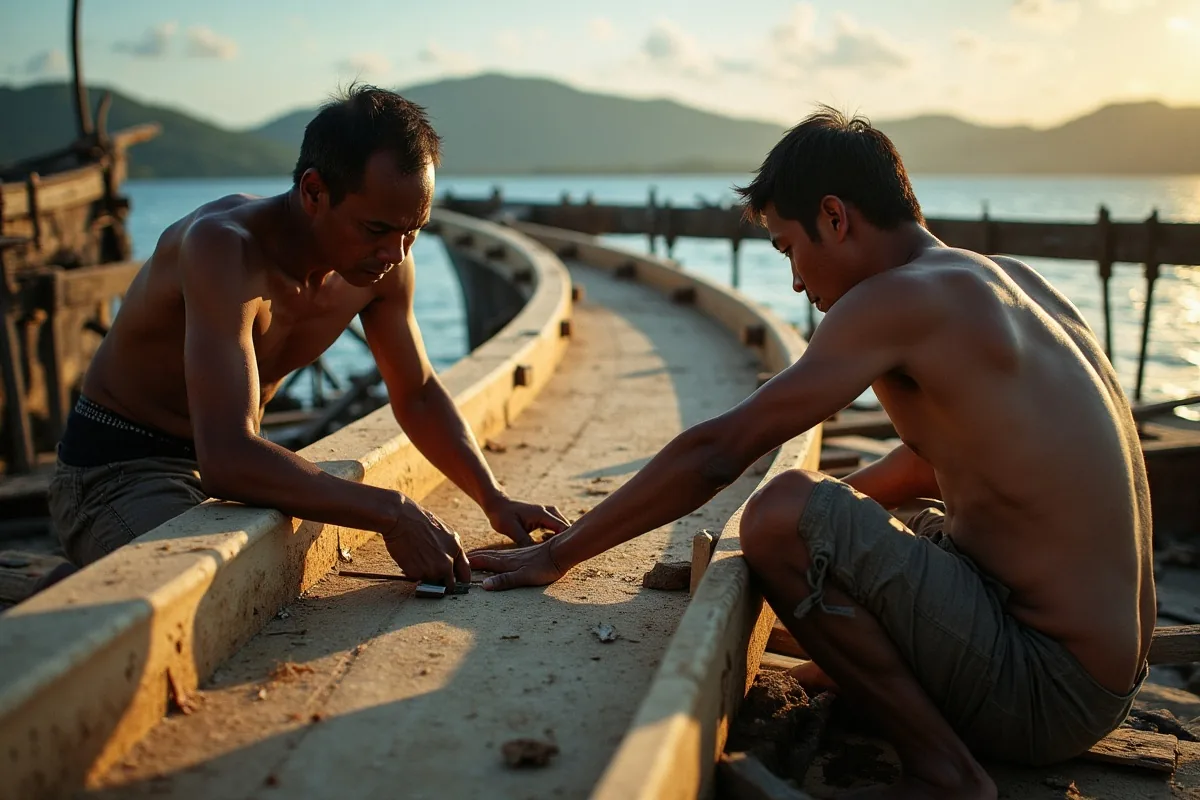
Every owner who admires a phinisi’s sheer line is admiring an education. The knowledge that shapes and repairs these hulls — how a plank wants to bend, where a frame will take a fastening, when caulking is tight enough — lives in people, and people retire. The yards of eastern Indonesia inherited their craft from the great boatbuilding villages of South Sulawesi, whose shipwrights carried the phinisi tradition across the archipelago; keeping that inheritance working in Labuan Bajo is a deliberate effort. This article explains how our apprentice pipeline runs, and why it matters to the owners whose boats we repair at the phinisi shipyard.
Where the Craft Comes From
Indonesian wooden shipbuilding is a living tradition — recognised by UNESCO in 2017 through the inscription of South Sulawesi’s phinisi boatbuilding art — and its methods travelled with the builders themselves as charter fleets grew at the Komodo gateway. Senior hands working in Flores today learned from fathers and uncles who built hulls on open beaches with hand tools. The tradition’s strength is judgement: reading timber, trusting the eye, working without drawings. Its risk is that judgement disappears one retirement at a time unless the next generation stands beside it, plank by plank.
What an Apprentice Actually Learns
The pipeline starts with the humble jobs that teach material honestly: moving and stacking timber, cleaning seams, watching a master fit a plank before ever shaping one. From there the ladder climbs through caulking — driving cotton and payed seams until the rhythm is right — then plank scarfing and fitting, fastening patterns, frame repairs and finally the layout judgement that decides how a damaged section is renewed. Timber selection runs through it all, from species and grain to the sourcing realities covered in our repair timber guide. Nobody advances by time served; they advance when the master signs off the skill.
Adding the Modern Layer
Traditional judgement now works alongside measured methods, and apprentices learn both without being asked to choose. They see moisture meters and fastener pull checks confirm what a senior hand suspected by eye; they help document repairs with photographs and sketches for the vessel’s file; they learn why a surveyor’s finding is written the way it is during hull inspections. Cross-trade exposure widens the base: weeks alongside the welders of our steel shop, the engineers and the coating crews, so a shipwright understands the trades working beside him on the same cradle.
Safety as Part of the Craft
The apprentice pipeline is also where the yard’s safety culture reproduces itself. New hands learn staging discipline, PPE habits and stop-work authority from the first week, taught by the same seniors who teach plank fitting — the system described in our yard safety standards. This pairing matters: safety taught as bureaucracy gets ignored under pressure, while safety taught as craft — the way a professional simply works — holds when the winch is loaded and the season is at its busiest.
Keeping Talent on Flores
The quiet threat to every regional yard is drift: trained hands leaving for city wages in Surabaya or Batam. The honest answers are steady work, fair pay and visible progression — the charter fleet’s year-round maintenance demand makes the first possible, and the pipeline itself provides the third: apprentice to tradesman to leading hand, each step marked and paid. A yard that trains and keeps its people can promise owners the same crews season after season, which is worth more than any brochure claim — continuity is quality in this trade.
What It Means for Owners
Owners feel the pipeline in small, compounding ways: a caulking crew whose members learned the same rhythm; repairs documented so the next skipper understands what was done; apprentice labour honestly priced on suitable tasks under supervision; and a yard bench deep enough that peak season on the yard calendar does not mean unfamiliar subcontractors on your hull. The wider network behind the yard — including crews working through our refit programme — sends its hardest wooden-hull questions here for the same reason: the skills are current because they are being taught.
Frequently Asked Questions
Who trains the apprentices at the yard?
Senior shipwrights lead the craft side — hands with decades on wooden hulls — while supervisors add the measured-survey, documentation and safety layers. Advancement is signed off by the master a stage at a time, skill by skill.
Does apprentice labour work on customer boats?
Yes, on suitable tasks under direct supervision, and it is priced accordingly. Critical work — structural fits, final caulking passes, fastening in way of repairs — is done or personally checked by senior hands before it closes up.
How long does it take to become a working shipwright?
Useful within months, trusted within two to three years, senior after many more. The ladder is skill-based rather than time-based, and caulking is usually the first stage an apprentice owns end to end.
Why does a yard’s training culture matter to a boat owner?
Because continuity is quality. A yard growing its own people keeps the same crews, habits and standards season after season — and the repair on your hull is only ever as good as the least-taught pair of hands allowed near it.
To talk with the team behind the work, message WhatsApp +62 811 3941 4563 or email bd@juaraholding.com — or use our contact page. To meet the yard’s story more broadly, see about us and the Flores shipyard overview.