
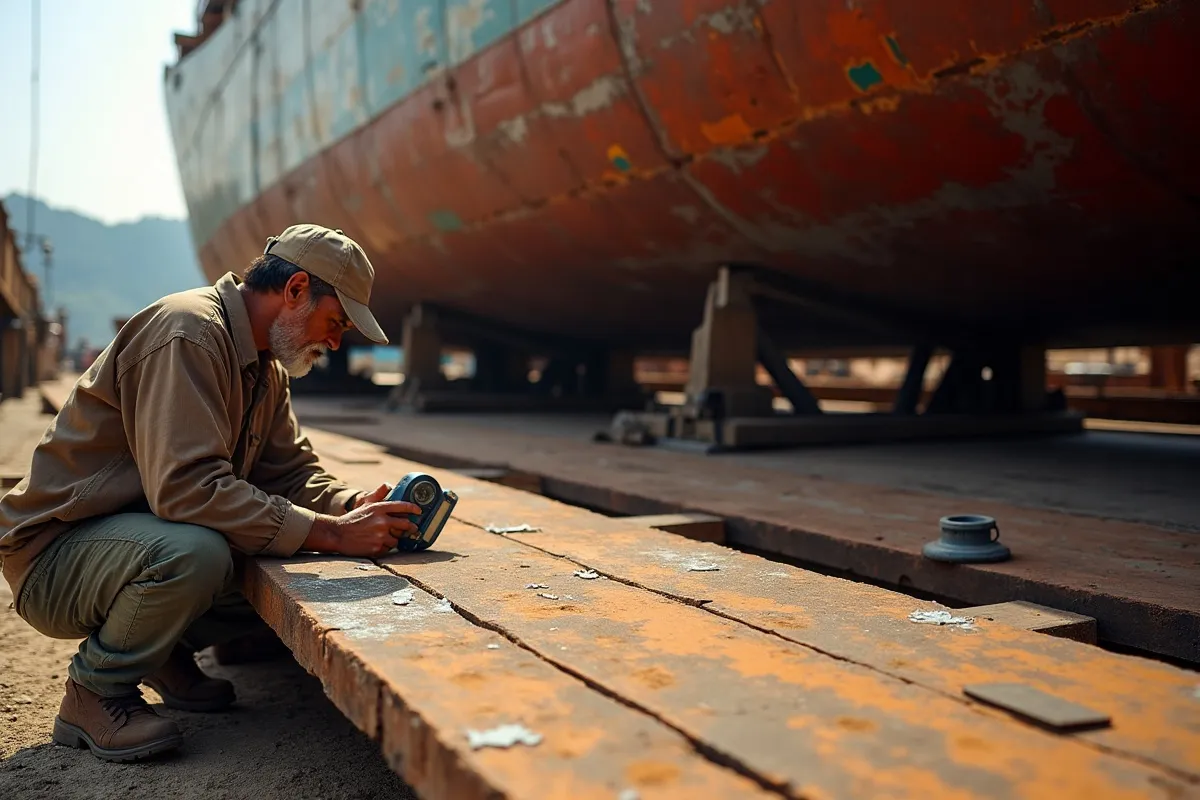
A hull inspection at the Komodo gateway is where the season’s repair budget is really decided. Everything that follows — the caulking metres, the plank count, the coating spec — flows from what the foreman and surveyor find in the first day ashore. This article explains what yards here check first, how wooden and fibreglass inspections differ, and how inspection findings turn into a work list you can actually price.
The First Hour: Keel, Stern Gear and Fittings
Before staging goes up, the inspection starts at the bottom. The keel line is sighted for hogging or grounding damage, the rudder is levered to feel bearing play, and the propeller and shaft get a first look for dings, fishing-line wrap and wear — anything suspicious is flagged for the stern gear specialists. Every seacock is worked open and shut from outside and in, anodes are graded for remaining life, and the transducer and intake grilles are cleared. These items are quick to put right on the hardstand and expensive to ignore afloat, so they lead every checklist.
Wooden Hulls: the Hammer Test and the Seams
For the phinisi fleet, the classic survey tools still rule: a light hammer and a sharp spike. The inspector taps along planking and hears the difference between sound timber and the dead note of rot or worm; suspect areas are spiked to confirm. Seams are checked for caulking that has hardened, cracked or started to weep, and fastenings are examined where rust streaks or proud plugs give them away. Garboards, the waterline strakes and the area around the sternpost get particular attention. Findings are chalked directly on the hull and photographed, which is exactly how a work list for the phinisi shipyard takes shape.
Fibreglass and Steel: Meters and Gauges
Fibreglass dive boats, speedboats and visiting yachts follow a different routine. After the wash-down the hull is allowed to surface-dry, then moisture readings are mapped below the waterline to catch osmosis early; blisters, crazing and impact damage are circled for laminate repair. Rudder stocks, P-brackets and keel roots are checked for stress cracking. Steel workboats get ultrasonic thickness readings on suspect plate and a close look at weld lines, with renewals handed to the yard’s welding team. Each material has its own failure habits; the inspection is about knowing where each one hides them.
When a Formal Survey Is Part of the Picture
Many haul-outs here are tied to a formal event: an insurance renewal, a flag or class requirement, or a sale. In those cases an independent surveyor attends alongside the yard, and demand for that service now runs well beyond Labuan Bajo — owners ask us to arrange surveyor attendance in Bali, Lombok and as far as Raja Ampat, timed to wherever the vessel can be slipped. Our marine survey support desk handles the scheduling either way, and for transactions the pre-purchase survey service pairs the inspection with a repair estimate, so a buyer knows both condition and cost before committing.
From Findings to a Priced Work List
An inspection is only useful once it becomes a scoped, sequenced work list. We sort findings into three bands: safety-critical items that must be closed before relaunch, condition items best done while the vessel is already ashore, and monitor items recorded with photographs for the next slip. Each band is priced in USD and agreed before work starts — indicatively, hardstand time runs USD 40–150 per day and coating work about USD 15–35 per square metre, with timber and machinery quoted per item. Structural findings that outgrow local facilities are escalated through our Indonesia-wide marine repair network to larger domestic yards.
Frequently Asked Questions
How long does a hull inspection take on the hardstand?
A first-pass inspection is done within a day of coming ashore. A full survey with moisture mapping, spike testing and a written report typically takes one to two further days, depending on vessel size and how much staging is needed.
Do I need to haul out for a hull inspection in Labuan Bajo?
Below-waterline condition can only be verified ashore, so insurers and buyers almost always require a haul-out. In-water diver checks are useful for interim looks at anodes, props and fouling, but they do not replace a hardstand inspection.
Can you arrange a surveyor outside Labuan Bajo?
Yes. We regularly coordinate surveyor attendance in Bali, Lombok and Raja Ampat as well as at the Labuan Bajo slipways, matching the appointment to a yard slot so the vessel is ashore when the surveyor arrives.
What happens if the inspection finds serious problems?
Safety-critical findings are quoted first and closed before relaunch; we photograph each repair stage for the owner and surveyor. If the works exceed local slipway capacity, we plan the passage to a larger partner yard and manage the handover.
To book a hull inspection or a full survey slot, message WhatsApp +62 811 3941 4563 or email bd@juaraholding.com with your vessel type and last slip date — or use our contact page. To understand the haul itself, read our haul-out and slipway guide, and for visiting yachts our yacht shipyard services page covers the wider work scope.