
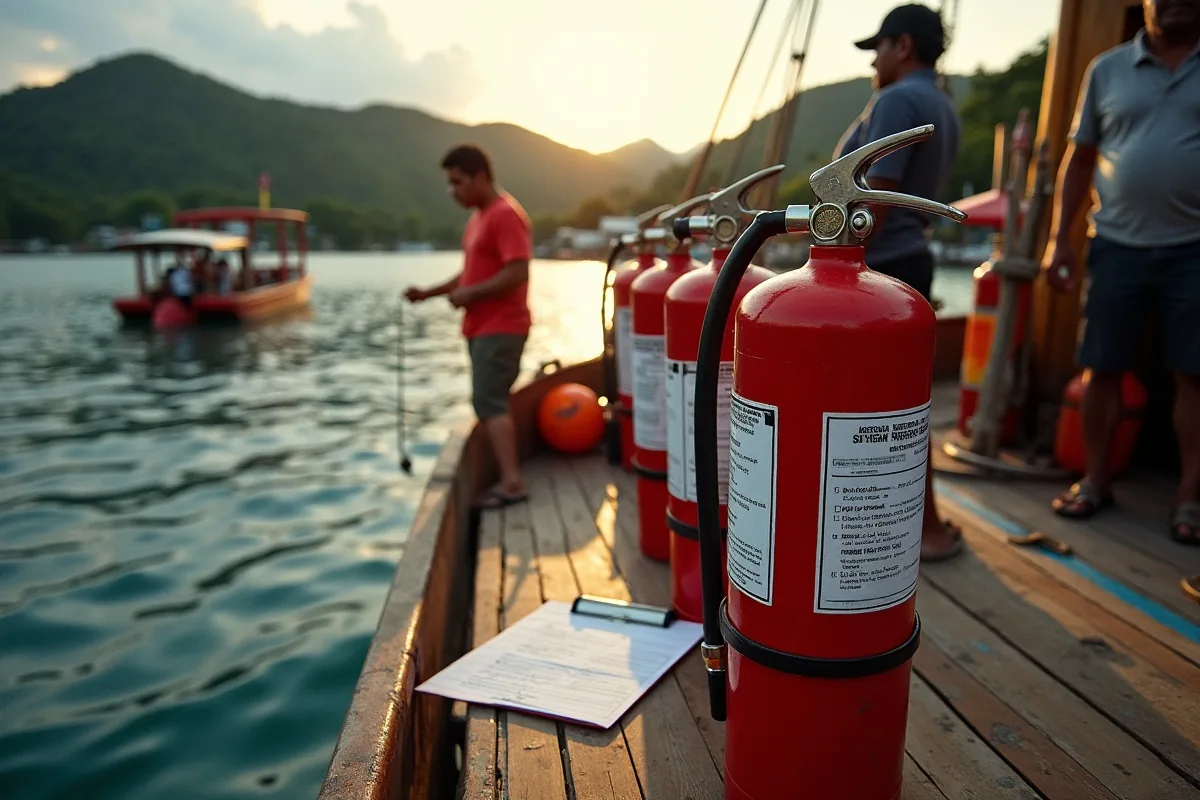
Safety gear is the equipment every owner buys hoping never to use — and the paperwork behind it is what keeps a charter operation legal. In the Komodo fleet, expired liferaft certificates and out-of-date flares are among the commonest findings when a vessel changes insurer, renews its charter documents or faces a survey. This article sets out what expires, who may service what, and how we fold the whole recertification round into a normal yard visit, working alongside our survey support team.
What Expires, and How Often
The working calendar looks like this: inflatable liferafts serviced at an approved station, typically every one to three years depending on make, age and float-free arrangement; pyrotechnic flares expire around three to four years from manufacture; EPIRB and PLB batteries carry five- to ten-year replacement dates and hydrostatic releases roughly two; portable extinguishers get annual checks with pressure testing on a longer cycle; fixed engine-room systems — FM-200, CO2, aerosol types — need periodic inspection, weighing and hose checks; lifejacket lights, cylinders and inflation heads have their own dates. None of it is negotiable once a surveyor opens the file.
Liferafts: The Item You Cannot Service Locally
Raft servicing must happen at a station accredited for that raft brand — a controlled unpack, inflation test, component replacement and repack. There is no such station in Labuan Bajo, and honesty about that fact is the start of good planning. We crate rafts and route them to accredited facilities in Bali or Surabaya on the freight chain described in our parts logistics guide, and the round trip takes two to four weeks. The workable pattern for charter boats: send rafts at the start of a planned lay period, or stagger two rafts across seasons so the vessel always sails compliant. Exchange programmes — a serviced raft swapped for yours — are available for some brands and collapse the wait entirely.
Flares, EPIRBs and the Date-Driven Items
Pyrotechnics are replacement items, not serviceable ones: we supply date-fresh flare kits and take the expired units into proper disposal rather than leaving them in a lazarette. EPIRBs are function-tested, battery-dated and their registration details checked against the vessel’s papers — a surprising number of beacons in any fleet still transmit a previous owner’s identity. Hydrostatic releases on rafts and beacons are simple date swaps that we do on deck in minutes during any visit.
Extinguishers and Fixed Fire Systems
Portable extinguishers are inspected, weighed and tagged annually, with refills and hydrostatic tests cycled through service partners. The engine-room fixed system deserves more respect than it usually gets: cylinders weighed against nameplate, actuation lines and alarms tested, nozzles clear, and shutdown interlocks proven — ideally with the machinery cold during a slip. Because hot work and fire protection interact, this service is scheduled deliberately within the yard’s safety standards routine, and crews are walked through the released-system drill as part of handover, a habit reinforced in our yard training culture.
The Paper Trail That Satisfies Surveyors
Every serviced item returns with its certificate, and the vessel leaves with one consolidated safety file: raft certificates, flare invoices with batch dates, EPIRB test records, extinguisher tags and the fixed-system report. That file is exactly what an insurance or flag surveyor asks to see first, and having it complete shortens every renewal — the same documentation discipline that closes findings in our insurance survey repairs work. We keep dated copies so a lost binder never becomes a failed inspection.
Planning and What Recertification Costs
The efficient pattern is one annual safety round timed with the vessel’s slip on the dry season yard calendar. Indicative USD figures, confirmed by quotation: liferaft servicing typically USD 400–1,200 per raft plus freight depending on size and findings; flare kits USD 150–450 per vessel set; EPIRB battery and release replacements USD 150–400; extinguisher rounds usually USD 100–300; fixed-system inspection from USD 250. For fleets, we batch raft rotations across vessels — often timed with a scheduled refit stay — so no boat misses a charter week.
Frequently Asked Questions
Can my liferaft be serviced in Labuan Bajo?
Not at an accredited station — none operates here yet. We crate and freight rafts to approved facilities in Bali or Surabaya and manage the round trip, typically two to four weeks, or arrange an exchange raft for supported brands so the vessel keeps operating.
What happens if a surveyor finds expired safety equipment?
It becomes a written finding that can hold up insurance renewal or charter documentation until closed. The cure is the paperwork round we run: service or replace the item, file the certificate, and present the consolidated safety file at the next inspection.
How do you dispose of expired flares?
Through controlled disposal with the authorities and our service partners — never overboard and never left aboard, where expired pyrotechnics are both a hazard and a finding. Disposal is logged in the safety file with the replacement batch dates.
Can recertification happen while the boat is in charter service?
Largely yes. Date swaps, extinguisher rounds and EPIRB tests happen dockside between trips. Liferaft rotations and fixed-system work are the two items best planned into a lay period, which is why we anchor the safety round to the yard booking.
To book a safety round or check your dates, message WhatsApp +62 811 3941 4563 or email bd@juaraholding.com with your equipment list and expiry dates — or use our contact page. For the survey side of compliance, start at condition survey.