
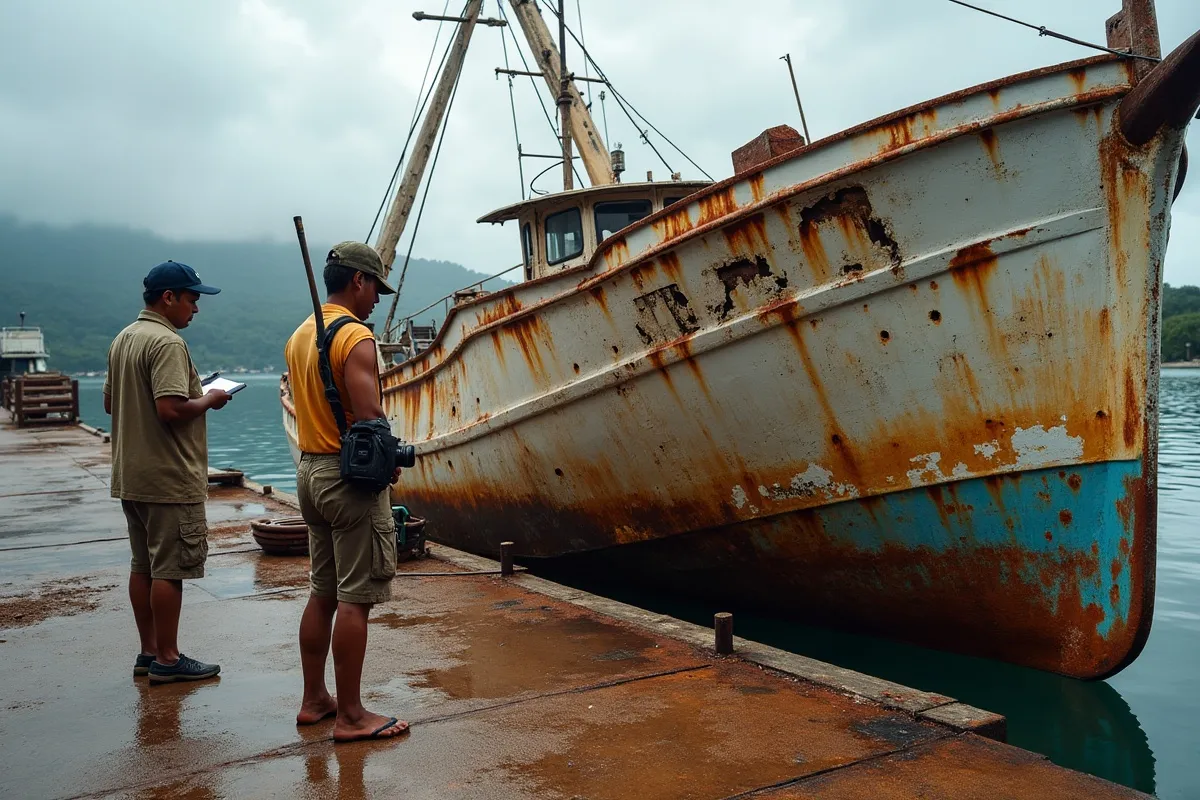
Squalls at the western end of Flores arrive fast, blow hard for an hour and leave a harbour full of small emergencies: dragged anchors, chafed lines, torn awnings, boats that met each other or the reef. The wet season from December to March produces most of them. What separates an expensive night from a catastrophic one is triage — doing the right checks in the right order while the adrenaline is still up. This is the sequence we walk crews through, and what happens next at the yard.
The First Hour: People, Water, Ground Tackle
Crew safety comes first and needs no elaboration. The vessel’s first question is watertight integrity: lift the sole boards and look, taste a suspicious bilge for salt, check every skin fitting, the stern gland and the lowest hull seams. A vessel taking water needs pumps and a plug before it needs any other decision — and if flooding is beyond the crew, that is an immediate call to our emergency call-out line. Third comes ground tackle: is the anchor holding now, is the chain damaged, is the vessel clear of neighbours and the lee shore? Only when those three are answered does anyone climb to look at awnings and woodwork.
Document Before You Tidy
The strong instinct after a storm is to clean up. Resist it for twenty minutes. Photograph everything from wide to close — the broken bulwark, the chafed line still on the bollard, the neighbour’s topsides paint on your rubbing strake — and note times, wind direction and witnesses while memory is fresh. Insurers settle faster on evidence gathered before things were moved, and so do the conversations between owners when two boats have touched. This record also becomes the spine of the repair scope, and pairs with the survey attendance described in our survey support service when a claim is involved.
Temporary Repairs That Do Not Cause Permanent Ones
Good triage buys time without adding damage. Torn canvas comes down before it flogs itself and its frame to pieces. Sprung planks get softwood wedges and a collision mat, not screws driven through wet timber. Broken rigging is lashed, cracked windows taped and boarded, chafed mooring lines end-for-ended or replaced from spares. The rule we give crews: a temporary repair should be reversible and should not create new holes. Everything else waits for daylight and the yard — where the hardstand inspection reveals what the waterline was hiding.
From Anchorage to Yard: Sequencing the Real Repairs
Once stabilised, damage sorts itself into afloat work and slipway work. Bulwarks, cap rails, canvas and rig repairs can often be done alongside; anything below the waterline — grounding contact, sprung seams, shaft or rudder impacts — belongs on the slipway, where the true extent is always more visible than it was from a dinghy. Groundings that left the vessel stranded escalate to our salvage and refloat procedure first. We quote in USD per itemised finding, sequence the work around tide windows and, for wooden hulls, bring in the phinisi shipwrights whose seam and plank work storm damage usually needs.
Before the Next Squall: Preparation Pays
Most storm losses in this anchorage repeat a short list: undersized or tired mooring lines without chafe gear, anchors set short in crowded water, awnings left rigged in the wet season, and dinghies towed instead of lifted. An hour of preparation — doubled lines, chafe protection, a squall checklist taped by the helm — prevents the majority of call-outs we attend. For vessels that took a hard season, a preventive lay period through yacht shipyard services beats waiting for the failure. Major structural casualties beyond local capacity are stabilised, surveyed on the slip — see our slipway haul-out procedure — and then escalated to partner yards.
Frequently Asked Questions
What should I check first on my boat after a squall?
Bilges and skin fittings — anything that lets water in outranks everything else. Then ground tackle and your position relative to neighbours and the shore. Deck and cosmetic damage comes last; it will still be there in an hour.
When should the insurer be notified after storm damage?
As soon as the vessel is stable — ideally the same day, with your photographs attached. Early notification with good evidence speeds approval for repairs, and we coordinate surveyor attendance so assessment does not delay the yard slot.
Can storm repairs be done at anchor, or must the boat be slipped?
Above-waterline carpentry, canvas and rig work are routinely done alongside. Any suspicion of underwater contact — grounding, collision, a new vibration — means a slipway inspection, because water hides the worst of it.
How busy is the yard after a big blow?
Genuinely busy — a single wet-season squall can put half a dozen boats on the list. Vessels with safety-critical damage are sequenced first; documented, stabilised boats with clear scopes get slots fastest, which is another reason triage and photos matter.
Storm damage on your hands? Message WhatsApp +62 811 3941 4563 (08:00–20:00 WITA) or email bd@juaraholding.com with photos and your position — or use our contact page for non-urgent scoping. For the repairs that follow, the haul-out guide explains how the slipway slot is planned.